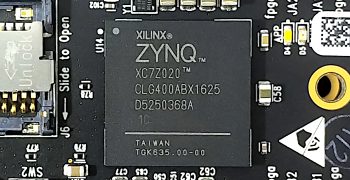
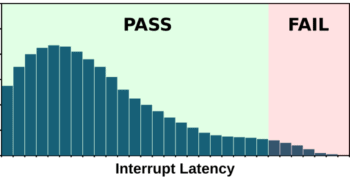

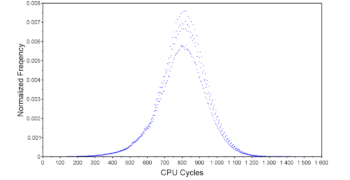
Continuing from the last post, this article explores features specific to early members of the ARM Cortex-A family such as the Cortex-A9 which can help reduce interrupt latency. Namely the L2 cache and TLB lockdown features found in those processors. It’s important to note that those two features are not available in more recent 32 and 64 bits ARM processors such as the Cortex-A7. Newer cores have a simpler TLB, and most often than not an integrated L2 cache instead of the external L2 found on the A9. However, the Cortex-A9 is still a popular core, found on the Xilinx Zynq-7000 and NXP i.MX 6 SoCs to name a few.
Comparing 4 Popular Embedded File Systems for NOR and NAND Flash

In this article, we discuss 4 popular file systems for both NOR and NAND flash, commonly used in bare metal and RTOS-based embedded systems: LittleFS, Yaffs, FileX and TSFS. We provide a brief description of each file system and compare their performance, RAM consumption and other specific advantages and limitations. There are plenty of other … Read more